Talks and Appearances
Speaking sessions, media appearances, and technical presentations across conferences and industry events.
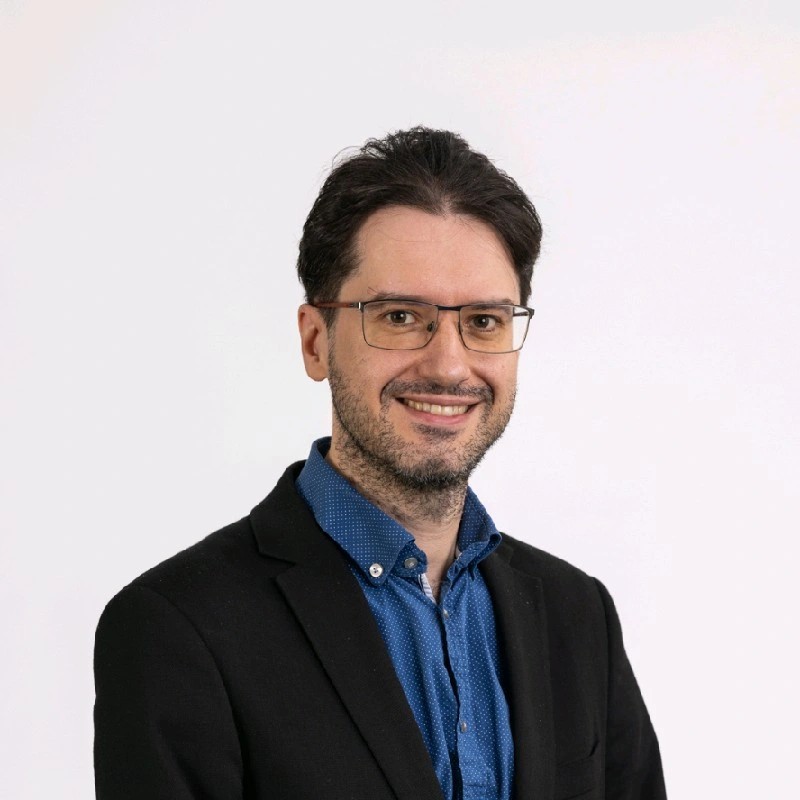
Talks by Marko Kokol
From RAG to Agents: How to Build a Trustworthy AI Operating Model
In recent years, organizations have experimented with generative artificial intelligence, RAG architectures, and large language models. However, genuine competitive advantage begins only when AI becomes part of an organization’s operating model. The next step goes beyond building better chatbots: developing (autonomous) agentic systems that can use tools, access knowledge, verify sources, perform bounded actions within business processes, and provide a traceable explanation of their decisions.
RAG, knowledge graphs, agentic workflows, and memory are increasingly being combined within the same systems, but they refer to different architectural layers; the talk will therefore treat them as distinct layers. A knowledge graph, for example, can represent the non-parametric knowledge or memory from which a RAG system retrieves information. GraphRAG will serve as a concrete example of how graph-based knowledge representation can be combined with retrieval.
In this talk, we will examine how to move from a conventional RAG system to a secure, agentic RAG pattern in which the model does more than answer questions: it operates within clearly defined rules, permissions, evaluation mechanisms, and human oversight.
Particular attention will be given to the recently applicable AI Act, the Slovenian language, domain-specific knowledge, data protection, prompt-injection risks, quality measurement, and the relationship between AI architecture and business KPIs.
The demonstration will present a small but realistic architecture for a domain-specific agent that works with documents, uses restricted tools, logs its decisions, and makes it possible to verify both the quality of its answers and the actions it performs.
Quantum-Safe Architecture: How to Prepare Your Organization for Post-Quantum Cryptography
Quantum computing is no longer merely a research topic confined to laboratories; it is becoming a strategic issue for digital resilience, cybersecurity, and the long-term ability of organizations to replace their cryptographic mechanisms.
In this talk, we will examine why post-quantum cryptography is not simply a matter of replacing one algorithm with another, but rather an architectural, operational, and governance challenge. Participants will learn the differences between quantum computing, post-quantum cryptography, quantum key distribution (QKD), and the concept of a quantum-safe architecture. They will also see where cryptography is actually embedded: in applications, APIs, certificates, identities, code signing, data in transit, data at rest, and supply chains.
The central part of the talk will be practical: how to begin building a cryptographic inventory, how to approach crypto-agility, and how to prepare a 90-day transition plan for an environment in which cryptographic mechanisms can be replaced in a controlled and traceable manner, without requiring a complete redesign of existing systems.
The talk is a natural continuation of last year’s introduction to quantum programming with Q#, but it focuses on an issue that CIOs, CISOs, architects, and developers will need to address long before quantum computers become an everyday part of production environments.